غزوة بني قريظة
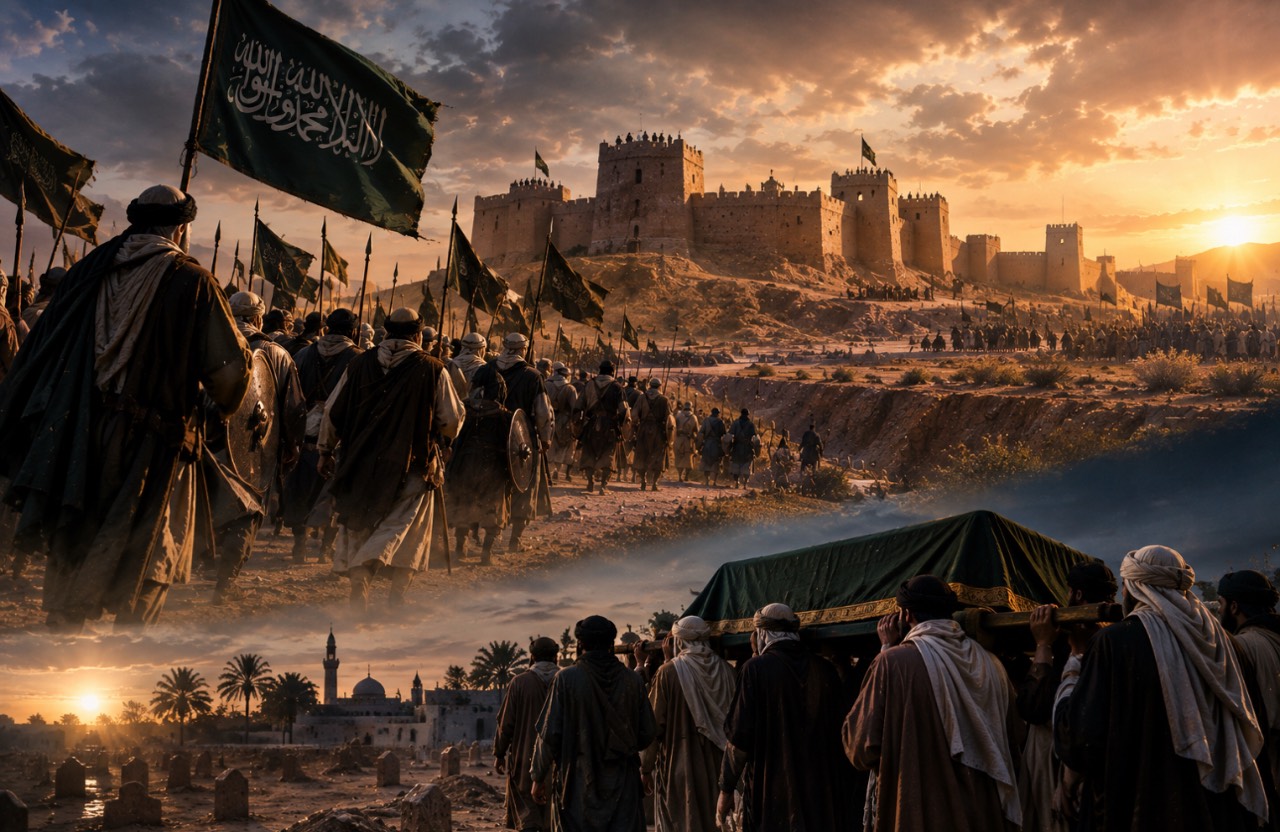
بعد انهزام و انسحاب الأحزاب، لبس النبي ملابس الحرب مرة أخرى وأمر بلال أن ينادي المسلمين {{ لا يصلين أحدكم العصر إلا في بني قريظة }} وهكذا خرج الرسول وخرج المسلمون و وضع أمين يحرس المدينة {{ عبد الله بن أم مكتوم }} و هو الرجل الأعمى ، الذي نزل فيه قول الله تعالى {{عبس وتولى أن جاءه الأعمى }} و قد وضعه النبي حارس على المدينة {{ ١٤ مرة }} يصلي بالناس ويرعى شؤون المدينة وأعطى النبي الراية {{ لعلي بن ابي طالب }} فسبق الجيش الى {{ بني قريظة }} وغرس الراية في أصل الحصن فأخذ بني قريظة يتكلمون على النبي على مسمع {{ علي }} فلم يرد عليهم وانما قال :_ السيف بيننا وبينكم و اتجه المسلمون الى {{ بني قريظة }} وكانت المسافة من المسجد النبوي الى {{ بني قريظة }} حوالي {{ ١٠ كم }} وأدرك البعض صلاة العصر في الطريق ولكنهم لم يصلوا العصر لأن النبي صلى الله عليه وسلم قال {{ لا يصلين أحدكم العصر ، إلا في بني قريظة }} وكادت الشمس أن تغيب وتفوت هؤلاء صلاة العصر في وقتها فأختلف الصحابة في الأمر هل يصلون العصر قبل أن يخرج وقتها ؟؟ أم يأخرونها عن وقتها حتى يصلون الى بني قريظة ؟ فصلى البعض العصر وقالوا أن الرسول لم يكن يقصد النهي وانما كان يقصد أن يسرع الصحابة بالخروج الى بني قريظة بينما لم يصلي البعض الآخر العصر وتمسك بأوامر الرسول تمسكاً حرفياً حتى فاتته صلاة العصر في وقتها فلما أخبروا النبي أقر (وافق) الفريق الأول على صلاته العصر في وقتها واقر (وافق) الفريق الآخر الذي فاتته صلاة العصر فكان قد فتح باب الاجتهاد لأصحابه بين يديه وهو على قيد الحياة فلما أقترب النبي من حصون {{ بني قريظة}} نادى عليهم من وراء الحصن: يا كعب يا حيي [[ وكان حيي بن أخطب قد دخل مع بني قريظة حصنهم حين رجعت الأحزاب ، وفاء لكعب بما كان عاهده عليه ، و ذلك عندما قال لكعب وهو يقنع حيي بنقض العهد ، اعاهدك إن انهزمت الاحزاب ان ادخل معك الحصن،،، لذلك ها هو معهم ]] نادى عليهم النبي من وراء الحصن ثم ضرب عليهم الحصار ،،، و اجتمع المسلمون عند {{ بني قريظة }} وأخذوا يرمونهم بالسهام فلما رأى ذلك {{ كعب بن أسد }} سيد قريظة ،،، وقف في قومه ودعاهم الدخول بالإسلام وقال لهم: لقد تبين لكم أنه نبي مرسل ،،، وأنه الذي تجدونه في كتابكم،،، وما منعنا من الدخول معه إلا الحسد للعرب حيث لم يكن من بني إسرائيل ،،،، فادخلوا في الإسلام تأمنون على دمائكم وأموالكم ونسائكم وأبنائكم ولكن رفض كل يهود {{ بني قريظة }} الدخول في الإسلام وقالوا : _لا نفارق حكم التوراة أبدا، ولا نستبدل به غيره وطلب {{ بني قريظة}} من الرسول أن يرسل اليهم أحد الصحابة وهو {{ أبو لبابة }} حتى يستشيروه لأنه كان أقرب الصحابة اليهم، لأنه كانت له معهم صلات نسب وعلاقات تجارية فوافق الرسول و قال : _يا ابا لبابة ،،، اذهب إلى حلفائك،،، فإنهم اختاروك من بين جميع الأوس فلما دخل عليهم ابو لبابة،،، قام إليه الرجال وبكى النساء والصبيان في وجهه بسبب الحصار وما أصابهم بعد غدرهم و خيانتهم ثم أرادوا ان يستشيروه و قالوا : يا أبا لبابة،، أترى أن ننزل على حكم محمد ؟ فقال لهم :_ نعم و قام أبو لبابة بعدها بخطأ وهو تهديدهم و تخويفهم بقول ما لم يصدر عن النبي،،، فانتبه على نفسه و تاب وندم بسبب خروجه عن أوامر الرسول فنزل مسرعا وهو يبكي و ذهب الى المسجد النبوي ،،، وربط نفسه في أحد أعمدة المسجد بسلسلة ثقيلة يقول ابو لبابة:_ فوالله ما تحركت من مكاني حتى عرفت أني خنت الله ورسوله وقال: والله لا أحُلُّ نفسي منها [[ اي لا أفك وثاقي ]] حتى يحلني رسول الله بيديه ،،، ولا أذوق طعاماً ولاشراباً حتى يتوب الله علي أو أموت فلما بلغ رسول الله خبره ،،، قال: لو جاءني لاستغفرت له ،،، وأما إذ فعل ما فعل، فما أنا بالذي أطلقه حتى يتوب الله عليه وانزل الله في ابي لبابة قوله {{ يَا أَيُّهَا الَّذِينَ آَمَنُوا لَا تَخُونُوا اللَّهَ وَالرَّسُولَ وَتَخُونُوا أَمَانَاتِكُمْ وَأَنْتُمْ تَعْلَمُونَ }} وكان النبي كلما مر من جانبه لا ينظر إليه ولا يكلمه وبقي أيام على هذه الحال تحت الشمس الحارقة وكانت زوجته أو بنته تحُله إذا أراد الصلاة أو قضاء الحاجة فإذا فرغ أعادته إلى الرباط ومكث على هذه الحالة سبعة أيام لايذوق طعاما ولاشرابا حتى خر مغشيا عليه ثم نزلت توبته في القرآن العظيم في سورة التوبة بقوله تعالى {{ وَآخَرُونَ اعْتَرَفُوا بِذُنُوبِهِمْ خَلَطُوا عَمَلًا صَالِحًا وَآخَرَ سَيِّئًا عَسَى اللَّهُ أَنْ يَتُوبَ عَلَيْهِمْ إِنَّ اللَّهَ غَفُورٌ رَحِيمٌ }} فلما نزلت الاية اسرع الصحابة ليخبروه بالبشرى فقال ابو لبابة والله لاأَحُلُّ نفسي حتى يكون رسول الله هو الذي يحُلُّني فجاءه رسول الله فحله بيده أما يهود بني قريظة فقد استمر الحصار بضعة عشرة ليلة، فأبوا ان يطيعوا رسول الله ،،، فشدد الحصار عليهم،، ، وألقى الله الرعب في قلوبهم فقالوا :_ ننزل على حكم {{ سعد بن معاذ }} فأرسل الرسول في طلب سعد بن معاذ وكان لا يزال في المدينة ، لأنه كان قد أصيب في الأحزاب في وريده قال لهم النبي :_ لا تؤذوه،،، احملوه على دابة صغيرة واحاط به رجال قومه وكانت قدماه تخطان على الارض [[لانه على دابة صغيرة حتى لا يؤذوا جرحه ]] ورجال من قومه من الاوس يقولون له :_ يا سعد أحسن في مواليك ،،، فإن رسول الله قد حكمك فيهم لتحسن فيهم،،، يا سعد أحسن إليهم ،،، يا سعد إن هؤلاء نزلوا على حُكمِك، فاحكم فيهم [[ يعني الامر بأيدك إما أن تعفو و تصلح أو أن تعاقبهم ]] فوقف سعد فحمد الله واثنى عليه ،،، ثم التفت الى الجهة التي فيها وجوه اليهود وقومه من الانصار وقال :_ وعليكم عهد الله وذمته أن حكمي نافذ فيكم لايرد ؟ قالوا: - نعم ثم نظر الى المسلمين قال: _وعلى المسلمين ؟ فقال له الصحابة : نعم ثم ألتفت الى الجهة التي فيها رسول الله، واطرق رأسه أدباً واجلالاً وتعظيماً وقال : _ وعلى من ها هنا؟ فقال له النبي :_ نعم وعليَّ فحكم سعد فيهم و نفّذ الرسول والمسلمون حكمه و هو قتل المقاتلين و مصادرة الأموال و عندما جاءوا إلى {{حيي بن أخطب }} قال: مالمت نفسي في عدواتك يوماً (لم يندم على عداوته لرسول الله) ولكن من يَخذل الله يُخذل وقُتِل والذي كان له الدور الأبرز في تجميع القبائل، وهو والد السيدة [[ صفية]] والتي تزوجها النبي بعد ذلك بعامين و كان هذا رد قوي على من يدعي ان الإسلام دين قتل.. حيث أن النبي لم يقتل إلا المقاتلين فقط (لم يقتل رجال مدنين او شيوخ او اطفال او نساء) وهنالك من اسلم منهم لم يقتلوا ،، (ولم يقتل الذين لم يشتركوا في القتال ) وتعامل بالرحمة مع النساء ، فلم يبعد طفل أو طفلة عن أمه و كان هذا الرد الحازم ضروري لأنه لو لم ينصر الله المسلمين، لقُتل جميعهم نساءهم أطفالهم شيوخهم و الرجال المدنين الآمنين بدم بارد على يد الأحزاب في التوراة {{ العهد القديم }} الذي يقدسه اليهود والنصارى في سفر{{ التثنية }}الإصحاح رقم ٢٠ هذا النص {{ 10 حِينَ تَقْرُبُ مِنْ مَدِينَةٍ لِكَيْ تُحَارِبَهَا اسْتَدْعِهَا إِلَى الصُّلْحِ [[ قبل ما تحارب اي مدينة اعرض عليهم الصلح ]] 11 فَإِنْ أَجَابَتْكَ إِلَى الصُّلْحِ وَفَتَحَتْ لَكَ، فَكُلُّ الشَّعْبِ الْمَوْجُودِ فِيهَا يَكُونُ لَكَ لِلتَّسْخِيرِ وَيُسْتَعْبَدُ لَكَ. [[ إذا عرضت عليهم الصلح و وافقوا ، فكل الشعب يصبح خدم لك وعبيد ]] 12 وَإِنْ لَمْ تُسَالِمْكَ، بَلْ عَمِلَتْ مَعَكَ حَرْبًا، فَحَاصِرْهَا. [[ إذا اظهروا لك العداوة حاربهم وحاصرهم ]] 13 وَإِذَا دَفَعَهَا الرَّبُّ إِلهُكَ إِلَى يَدِكَ فَاضْرِبْ جَمِيعَ ذُكُورِهَا بِحَدِّ السَّيْفِ. [[ اذا حاربتهم و نصرك الله عليهم اقطع رقاب كل الرجال اللي حاربوك ]] 14 وَأَمَّا النِّسَاءُ وَالأَطْفَالُ وَالْبَهَائِمُ وَكُلُّ مَا فِي الْمَدِينَةِ، كُلُّ غَنِيمَتِهَا، فَتَغْتَنِمُهَا لِنَفْسِكَ، وَتَأْكُلُ غَنِيمَةَ أَعْدَائِكَ الَّتِي أَعْطَاكَ الرَّبُّ إِلهُكَ. [[ نسائهم وذريتهم سبايا وكل اموالهم تكون غنيمة لك من الرب ]] 15 هكَذَا تَفْعَلُ بِجَمِيعِ الْمُدُنِ الْبَعِيدَةِ مِنْكَ جِدًّا الَّتِي لَيْسَتْ مِنْ مُدُنِ هؤُلاَءِ الأُمَمِ هُنَا. 16 وَأَمَّا مُدُنُ هؤُلاَءِ الشُّعُوبِ الَّتِي يُعْطِيكَ الرَّبُّ إِلهُكَ نَصِيبًا فَلاَ تَسْتَبْقِ مِنْهَا نَسَمَةً مَّا هذا ما ورد في كتاب اليهود المقدّس أما سعد،، كان قد طلب من الله نهايته و طريقة موته و قد أعطاه الله ما طلب،،، قال سعد: {{ اللهم أفجرها (اي الجرح) وأجعلها طريقي للجنة }} فأنفجرت جرحه [[ كما دعا الله تماماً ]]وسالت منه الدماء حتى خرجت من خارج الخيمة واقترب الموت يقول الصحابة :_ فخرج الرسول من إحدى حجراته مسرعاً يجر ردائه خلفه وهو يقول لاصحابه :_ قوموا ، قوموا فأشهدوا موت رجل يهتز له عرش الرحمن ،،، قوموا ، فقد سبقتكم الملائكة إليه قال :_ فدخل على خيمة سعد فقال لسعد من كان معه في الخيمة :_ها هو رسول الله قد حضر يا سعد ففتح عينيه سعد ، ونظر للنبي وقال :_ يا رسول الله لقد سألت الله الآن ، ان لا يقبض روحي حتى يكون آخر ما يقع عليه بصري من هذه الدنيا هو وجهك يارسول الله فإني {{ أشهد أن لا اله الا الله وأنك رسول الله }} فمات وأمر النبي ان يُحمل الى البقيع ويدفن فيها بجانب المسجد النبوي وعندما حملوا جنازته، كانت خفيفة فتعجبوا لذلك قالوا :_ يا رسول الله والله ما رأينا جنازة خفيفة كجنازة سعد فقال لهم النبي : وهل تركت لكم الملائكة ما تحملونه من النعش ،،، لقد انزل الله {{ ٧٠ الف }} من الملائكة لم ينزلوا الى الارض قبل اليوم ليحملوا نعش سعد بن معاذ مات سعد شابا عمره {{ ٣٦ عاما}} ولم يتجاوز عمره في الاسلام {{ ٦ سنوات}} إلا أن أنجازاته في الاسلام يعجز أن يفعله الكثيرون في أعمار طويلة
The Battle of Banu Qurayza After the defeat and withdrawal of the Confederates, the Prophet put on his battle garments once again and ordered Bilal to call out to the Muslims: “Let none of you pray ’Asr except at Banu Qurayza.” And so the Messenger of God set out, and the Muslims set out with him. He appointed ’Abdullah ibn Umm Maktum, the blind man, to guard Medina. It was concerning him that Allah Almighty revealed: “He frowned and turned away because there came to him the blind man.” The Prophet had appointed him to oversee Medina fourteen times, leading the people in prayer and taking care of the affairs of the city. The Prophet gave the banner to ’Ali ibn Abi Talib, who went ahead of the army toward Banu Qurayza and planted the banner at the base of their fortress. The people of Banu Qurayza began insulting the Prophet within ‘Ali’s hearing. He did not respond to them. Instead, he simply said: “The sword is between us and you.” The Muslims then headed toward Banu Qurayza. The distance from the Prophet’s Mosque to Banu Qurayza was approximately 10 kilometers. Some of the companions reached the time of ’Asr prayer while they were still on the road, but they did not pray ’Asr, because the Prophet had said: “Let none of you pray ’Asr except at Banu Qurayza.” The sun was almost setting, and they were about to miss the prayer within its proper time. The companions differed over what the Prophet’s command meant. Should they pray ’Asr before its time expired? Or should they delay it until they reached Banu Qurayza? Some of the companions prayed ’Asr and said that the Prophet did not intend to order them to let the prayer time pass. Rather, he intended them to hurry toward Banu Qurayza. Others did not pray ‘Asr, adhering to the Prophet’s command literally, until the time for ’Asr had passed. When they later told the Prophet what had happened, he approved the first group for having prayed ’Asr within its proper time. And he also approved the second group, whose ’Asr prayer had passed. Thus, the Prophet opened the door to ijtihad—independent reasoning—in front of his companions while he was still alive. The Siege of Banu Qurayza When the Prophet approached the fortresses of Banu Qurayza, he called out to them from outside the fortress: “O Ka’b! O Huyayy!” Huyayy ibn Akhtab had entered the fortress of Banu Qurayza when the Confederates retreated, keeping his promise to Ka’b. He had promised Ka’b when he was persuading him to break the treaty: “I promise you that if the Confederates are defeated, I will enter the fortress with you.” And so Huyayy was now there with them. The Prophet called out to them from outside the fortress. Then he laid siege to them. The Muslims gathered around Banu Qurayza and began shooting arrows at them. When Ka’b ibn Asad, the leader of Banu Qurayza, saw what was happening, he stood among his people and called upon them to embrace Islam. He said: “It has become clear to you that he is a Messenger sent by God, and that he is the one you find mentioned in your Scripture. Nothing prevented us from following him except our envy toward the Arabs, because he was not from the Children of Israel. So embrace Islam, and you will be safe regarding your lives, your wealth, your women, and your children.” But all the Jews of Banu Qurayza refused to embrace Islam. They said: “We will never abandon the judgment of the Torah, nor replace it with anything else.” Banu Qurayza then asked the Prophet to send one of his companions to them—Abu Lubabah—so that they could consult him. He was the closest of the companions to them because he had ties of kinship and commercial relationships with them. The Prophet agreed and said: “O Abu Lubabah, go to your allies. They have chosen you from among all the Aws.” When Abu Lubabah entered, the men came toward him, while the women and children wept before him because of the siege and everything that had happened to them after their treachery and betrayal. They wanted his advice and asked: “O Abu Lubabah, do you think we should submit to Muhammad’s judgment?” He replied: “Yes.” But then Abu Lubabah made a mistake. He threatened and frightened them by saying something that the Prophet had not said. He immediately realized what he had done. He repented and deeply regretted having gone beyond the Prophet’s instructions. He hurried away weeping and went to the Prophet’s Mosque, where he chained himself to one of the mosque’s pillars with a heavy chain. Abu Lubabah said: “By Allah, I will not move from this place until I know that I have betrayed Allah and His Messenger.” He also said: “By Allah, I will not release myself from this bond until the Messenger of God releases me with his own hands. And I will neither eat nor drink until Allah accepts my repentance or I die.” When the Messenger of God was informed of what had happened, he said: “Had he come to me, I would have asked Allah to forgive him. But since he has done what he has done, I will not release him until Allah accepts his repentance.” And Allah revealed concerning Abu Lubabah: “O you who believe, do not betray Allah and the Messenger, nor knowingly betray your trusts.” Whenever the Prophet passed by him, he would neither look at him nor speak to him. Abu Lubabah remained in this state for days beneath the scorching sun. His wife or daughter would release him when he needed to pray or relieve himself, and when he had finished, she would tie him up again. He remained in this condition for seven days, tasting neither food nor drink, until he collapsed unconscious. Then his repentance was revealed in the Noble Qur’an in Surah al-Tawbah: “And there are others who have acknowledged their sins. They have mixed a righteous deed with another that was evil. Perhaps Allah will turn to them in repentance. Indeed, Allah is Most Forgiving, Most Merciful.” When the verse was revealed, the companions hurried to bring him the good news. But Abu Lubabah said: “By Allah, I will not release myself until the Messenger of God is the one who releases me.” So the Messenger of God came to him and released him with his own hand. Banu Qurayza Submit to the Judgment of Sa’d ibn Mu’adh As for the Jews of Banu Qurayza, the siege continued for more than ten nights. They refused to obey the Messenger of God, so he intensified the siege against them, and Allah cast fear into their hearts. Finally, they said: “We will submit to the judgment of Sa’d ibn Mu’adh.” The Messenger of God sent for Sa’d ibn Mu’adh. He was still in Medina because he had been wounded during the Battle of the Confederates in one of his veins. The Prophet said: “Do not harm him. Carry him on a small animal.” The men of his tribe surrounded him, and his feet were dragging along the ground because he was being carried on a small animal so that his wound would not be aggravated. Some men from his tribe, the Aws, said to him: “O Sa’d, be good to your allies. The Messenger of God has appointed you to judge them, so be good to them. O Sa’d, show them kindness. O Sa’d, they have submitted to your judgment, so judge them.” Meaning: The matter is in your hands. You may forgive them and seek reconciliation, or you may punish them. Sa’d stood. He praised Allah and glorified Him. Then he turned toward the side where the Jewish leaders and the men of the Ansar were gathered and said: “Do you accept Allah’s covenant and His pledge that my judgment concerning you will be carried out and will not be rejected?” They said: “Yes.” Then he turned toward the Muslims and said: “And the Muslims?” The companions replied: “Yes.” Then he turned toward the direction where the Messenger of God was sitting. He lowered his head out of respect, reverence, and honor, and said: “And those who are here?” The Prophet replied: “Yes—and I am included.” Sa’d then gave his judgment concerning them. The Prophet and the Muslims carried out his judgment: the fighting men were executed and their wealth was confiscated. When they came to Huyayy ibn Akhtab, he said: “I have never regretted my hostility toward you. But whoever abandons Allah will himself be abandoned.” And he was killed. He was the man who had played the greatest role in gathering the tribes together against the Muslims. He was also the father of Safiyyah, whom the Prophet would marry two years later. A Response to the Claim That Islam Is a Religion of Killing This was also a powerful response to those who claim that Islam is a religion of killing. The Prophet did not kill except those who had fought against the Muslims. He did not kill civilian men, elderly people, children, or women. Those among them who embraced Islam were not killed. Those who had not participated in the fighting were not killed. He treated the women with mercy and did not separate a boy or girl from his or her mother. This decisive response was necessary because, had Allah not granted the Muslims victory, all of them—their women, children, elderly people, and peaceful civilians—could have been slaughtered in cold blood by the Confederates. The Torah and the Treatment of Defeated Peoples In the Torah, the Old Testament, which Jews and Christians revere, in the Book of Deuteronomy, Chapter 20, the following passage appears: 10. “When you approach a city to fight against it, proclaim an offer of peace to it.” Meaning: Before fighting any city, offer them peace. 11. “And if it responds to you peacefully and opens its gates to you, then all the people found in it shall be subject to forced labor and shall serve you.” Meaning: If they accept the offer of peace, all the people become servants and slaves. 12. “But if it does not make peace with you, but makes war against you, then besiege it.” Meaning: If they show hostility toward you, fight them and besiege them. 13. “And when the LORD your God gives it into your hand, you shall put all its males to the sword.” Meaning: If you fight them and God grants you victory over them, kill all the men who fought against you. 14. “But the women, the children, the livestock, and everything else in the city—all its spoil—you may take as plunder for yourselves, and you may eat the spoil of your enemies that the LORD your God has given you.” Meaning: Their women and offspring become captives, and all their wealth becomes spoils given to you by the Lord. *15. “Thus you shall do to all the cities that are very far from you, which are not the cities of the nations here.” 16. “But in the cities of these peoples that the LORD your God is giving you as an inheritance, you shall not leave alive anything that breathes.” This is what appears in the sacred book of the Jews. The Death of Sa’d ibn Mu’adh As for Sa’d, he had asked Allah for his end and for the manner in which he would die, and Allah granted him what he had asked for. Sa’d had said: “O Allah, make the wound burst open and make it my path to Paradise.” His wound then burst open, exactly as he had asked Allah, and blood flowed from it until it came out beyond the tent. Death was drawing near. The companions said: “The Messenger of God suddenly came rushing out from one of his chambers, dragging his garment behind him, and said to his companions: ‘Rise! Rise! Come and witness the death of a man whose death causes the Throne of the Most Merciful to tremble. Rise, for the angels have preceded you to him.’” He entered Sa’d’s tent. The people inside said to Sa’d: “Here is the Messenger of God, Sa’d.” Sa’d opened his eyes and looked at the Prophet. He said: **“O Messenger of God, I have just asked Allah not to take my soul until the last thing my eyes see of this world is your face, O Messenger of God. I bear witness that there is no god but Allah and that you are the Messenger of God.”** Then he died. The Prophet ordered that he be carried to al-Baqi’ and buried there beside the Prophet’s Mosque. When they carried his funeral bier, it felt remarkably light. They were astonished by this. They said: “O Messenger of God, by Allah, we have never seen a funeral bier as light as Sa’d’s.” The Prophet said: “Did the angels leave you anything to carry? Allah sent down seventy thousand angels who had never descended to the earth before this day, and they carried the funeral bier of Sa’d ibn Mu’adh.” Sa’d died young, at the age of thirty-six. He had spent only six years as a Muslim, yet the achievements he made for Islam were greater than what many people accomplish over much longer lives.