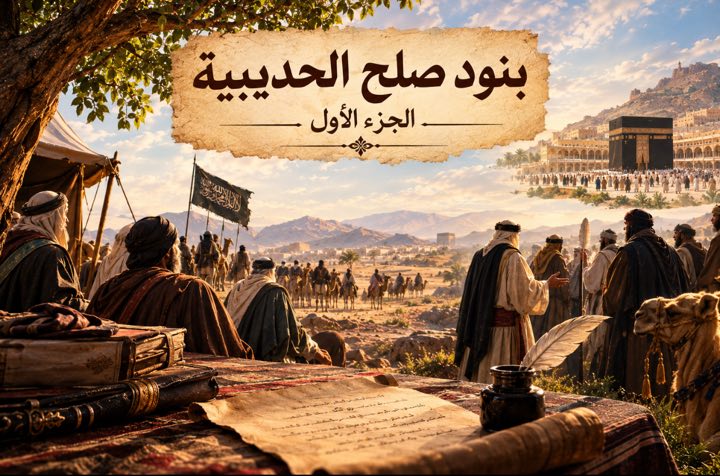
بنود صلح الحديبية-الجزء الاول
بايع الصحابة الكرام النبي تحت الشجرة {{ بيعة الرضوان }} و وصل الخبر لقريش فأصاب قريش الرعب ، والخوف والهلع ، من هذه البيعة فقال لعثمان :_ انطلق وقل لمحمد أن قريش وافقت على الصلح وأرسلت قريش {{ سهيل بن عمرو }} وهو شخصية هادئة طيبة ومعه رجال من قريش ورآه النبي من بعيد قال لأصحابه :_ قد سهل لكم أمركم ، ما أرسلت قريش هذا إلا لأنهم يريدون الصلح لكن لماذا اختارت {{ قريش }} هذه الشخصية الهادئة الطيبة السهلة ، ليتفاوض مع النبي؟ لماذا لم ترسل أحد من الصقور يعني مثل {{عمرو بن العاص }} أو {{ خالد بن الوليد }} أو {{ عكرمة بن أبي جهل}} أو {{صفوان بن أمية }} أو {{ أبو سفيان بن حرب }} ؟؟ السبب هو أن قريش ١_ كانت تريد الصلح ٢_ خائفة من الحرب ٣_ خائفة من البيعة التي بايع المسلمون النبي عليها [[ بيعة الموت ]] فكانت قريش لا تريد أن ترسل أحد يمكن أن يصل بالأمور الى طريق مسدود ومن ثم الى الحرب والقتال جاء سهيل فسلم وجلس الى النبي فقال :_ يا محمد إن قريش قد أرسلتني إليك أمثّلهم فأعطيك وأخذ منك أما الأولى يا محمد هي {{ البند الأول }} أن يرجع المسلمون ولا يدخلون مكة لأداء العمرة هذا العام ولا تدخل عليهم عنوة أبدا ترجع الى بلدك [[ أي المدينة ]] فصاح أصحاب النبي وقالوا :_ بلدنا وبلد رسول الله هي مكة !! فأشار إليهم النبي أن اسكتوا ، فسكتوا فأكمل سهيل ترجع الى بلدك هذا العام لا تدخلها ، على أن يأتوا العام القادم لأداء العمرة فيدخلون مكة بسيوفهم فقط ، والسيوف في اغمادها ويظلون في مكة ثلاثة ايام فقط، ثم يخرجوا منها بعد ذلك وتترك قريش لهم مكة هذه الأيام الثلاثة فقال النبي :_ رضينا {{ البند الثاني }} وضع (ترك) الحرب بين المسلمين وبين قريش عشر سنين فقال النبي:_ رضينا {{ البند الثالث }} للعرب الخيار،،، من أحب أن يدخل في عقد (دين) محمد وعهده دخل فيه ، ،،، ومن أحب أن يدخل في عقد قريش وعهدهم دخل فيه فقال النبي :_ رضينا {{البند الرابع }} من جاءك من قريش مسلماً بدون أذن وليه، ترده إلينا ،،،، ومن جاءنا من اصحابك مرتداً بأذن وبغير أذن لا نرده إليك فصاح الصحابة لا نعطي الدنية في ديننا والله ، ونحن على الحق وأنتم على الباطل فأشار النبي إليهم بيده ان اسكتوا فسكتوا فقال النبي:_ رضينا تحليل بنود قريش: البند الاول: لأن دخول المسلمين لأداء العمرة [[من وجهة نظرهم ]] سيهز هيبتهم ، ويحط كبريائهم في الجزيرة العربية البند الثاني: لأنه سيتيح للمسلمين التفرغ لبناء دولتهم ، والتفرغ للدعوة ولأن الدعوة في حالة الأمان أفضل من الدعوة في حالة الحرب وأيضا لإعطاء فرصة للمسملين ، لمحاربة عدوهم الثاني في الجزيرة العربية بعد قريش وهم اليهود وهذا ما حدث بالفعل بعد الحديبية أن توجه المسلمون لحرب اليهود في {{ خيبر }} اما لقريش يعني فك الحصار الإقتصادي الذي كان يفرضه النبي وهو جانب مادي بحت البند الثالث: لأن قريش كما قلت لكم من قبل كانت من أقوى قبائل الجزيرة وجميع القبائل في الجزيرة لها مصالح اقتصادية وغير اقتصادية مع قريش،،، فكانت قريش تمنع القبائل من الدخول في حلف مع النبي ،،،،ولذلك بعد هذه المعاهدة دخلت الكثير من القبائل في حلف مع النبي و أولهم كانت قبيلة {{ خزاعة }} كانت من القبائل الكبيرة في الجزيرة ، فبعد هذه المعاهدة دخلت في الاسلام البند الرابع: لأن المسلمين لا يريدون في الصف الإسلامي الا المؤمنين فقط ، ووجود غير المؤمنين في المدينة يضعف المسلمين ويمكن أن يكون عيناً لقريش وحقيقةً قريش لم تستفد من هذا البند شيئا لأن بعد الصلح ، ومع أول حالة كان هناك {{ امرأة }} اسلمت وتركت مكة وهاجرت الى المدينة فنزلت آية ألغت هذا البند بالنسبة للنساء قال تعالى في سورة الممتحنة {{ يَا أَيُّهَا الَّذِينَ آمَنُوا إِذَا جَاءَكُمُ الْمُؤْمِنَاتُ مُهَاجِرَاتٍ فَامْتَحِنُوهُنَّ ۖ اللَّهُ أَعْلَمُ بِإِيمَانِهِنَّ ۖ فَإِنْ عَلِمْتُمُوهُنَّ مُؤْمِنَاتٍ فَلَا تَرْجِعُوهُنَّ إِلَى الْكُفَّارِ ۖ لَا هُنَّ حِلٌّ لَهُمْ وَلَا هُمْ يَحِلُّونَ لَهُنَّ ۖ وَآتُوهُمْ مَا أَنْفَقُوا ۚ وَلَا جُنَاحَ عَلَيْكُمْ أَنْ تَنْكِحُوهُنَّ إِذَا آتَيْتُمُوهُنَّ أُجُورَهُنَّ ۚ وَلَا تُمْسِكُوا بِعِصَمِ الْكَوَافِرِ وَاسْأَلُوا مَا أَنْفَقْتُمْ وَلْيَسْأَلُوا مَا أَنْفَقُوا ۚ ذَلِكُمْ حُكْمُ اللَّهِ ۖ يَحْكُمُ بَيْنَكُمْ ۚ وَاللَّهُ عَلِيمٌ حَكِيمٌ }} ثم يقول تعالى {{ وَإِنْ فَاتَكُمْ شَيْءٌ مِنْ أَزْوَاجِكُمْ إِلَى الْكُفَّارِ فَعَاقَبْتُمْ فَآتُوا الَّذِينَ ذَهَبَتْ أَزْوَاجُهُمْ مِثْلَ مَا أَنْفَقُوا ۚ وَاتَّقُوا اللَّهَ الَّذِي أَنْتُمْ بِهِ مُؤْمِنُونَ }} بعد أن تم الإتفاق بين الطرفين، بدأوا بكتابة بنود هذا الإتفاق في صحيفة ووقع عليها الطرفان فقال سهيل :_ اكتب هذا يا محمد ، وليشهد عليه رجال من صحبك ورجال من صحبنا فقال النبي :_ ادنو يا علي ( علي بن ابي طالب) ،،، اكتب يا علي {{ بسم الله الرحمن الرحيم }} فنهض سهيل و وقف ،،،، وقال :_ ومن الرحمن الرحيم هذا ؟؟ فوالله ما ندري ما هو !! اكتب ما نعرفه نحن {{ باسمك اللهم }} فقال النبي لعلي :_ امُحها يا علي واكتب باسمك اللهم،،، فكتب ثم قال النبي :_ اكتب يا علي "هذا ما تصالح عليه {{ محمد رسول الله }}" فاستوقفه {{ سهيل }} مرة أخرى ،،،، وقال: _ يا محمد لو كنا نعلم أنك رسول الله ما صددناك عن البيت ولا قاتلناك [[ يقصد كيف نكتب في صحيفة أنك رسول الله ونوقع عليها، ونحن لا نعترف بنبوتك ونقاتلك ونصدك عن البيت ]] فقال النبي:_ اني رسول الله وان كذبتموني ،،، امُحها يا علي واكتب هذا ما تصالح عليه {{ محمد بن عبد الله }} مع {{ سهيل بن عمرو}} وكان علي قد أتم كتابة محمد رسول الله فقال علي :_ لا والله لا امحوها فقال النبي :_ امحها يا علي ، واكتب كما قال سهيل فقال علي :_ والذي بعثك بالحق لا امحها ، واضطرب الصحابة من حولهم فقال النبي:_ يا علي اين هذه الكلمة ، أرني مكانها ؟ فأشار له {{علي }} على مكان الكلمة ، فمحاها النبي بنفسه و هذا الموقف يدل على مرونة النبي لأن الأمور التي اعترض عليها {{سهيل بن عمرو}} أمور شكلية ، وليست هناك مخالفة شرعية ،،،،، والنبي يريد أن يمرر المعاهدة لأن فيها صالح المسلمين، وهي نصر وفتح للمسلمين قال النبي :_ يا علي والذي نفسي بيده لتعطينا من نفسك مثلها يوماً وانت على الحق [[ اي سوف تمر يا علي بنفس هذا الموقف وانت على الحق ]] و فعلا مضت الايام و توفي النبي و مرّ علي بنفس الموقف بعد خلافة ابو بكر الصديق ، و عمر بن الخطاب (الفاروق) ، و عثمان بن عفان (ذو النورين) ففي فترة خلافة علي بن ابي طالب، وقع الخلاف مع معاوية ، واشتد القتال حتى وصلوا لطاولة {{ التفاوض}} فجاء {{ عمرو بن العاص }} ممثلًا {{ معاوية بن ابي سفيان }} أمام علي للمفاوضة فعندما أرادوا أن يكتبوا الكتاب قال علي للكاتب :_ اكتب هذا ما تصالح عليه {{امير المؤمنين علي بن ابي طالب }} مع {{معاوية بن ابي سفيان }} فقال عمرو بن العاص :_ لا والله لو كنا نعلم انك اميراً للمؤمنين ما قاتلناك بل اكتب هذا ماتصالح عليه {{علي بن ابي طالب }} مع {{ معاوية بني ابي سفيان }} فبكى علي وهو يقول {{ اشهد أن لا إله إلا الله ، واشهد ان محمدا رسول الله }} وقال علي للكاتب :_ اكتب كما يريد ،،، والله لقد قالها لي النبي ونحن في {{ الحديبية }} يتبع الجزء الثاني ،،،،،
The Terms of the Treaty of Hudaybiyyah | Part One The noble Companions pledged their allegiance to the Prophet ﷺ beneath the tree in what became known as Bay’at al-Ridwan (the Pledge of Ridwan). When news of this pledge reached Quraysh, they were overcome with fear, terror, and panic. They told ’Uthman: “Go and tell Muhammad that Quraysh has agreed to make peace.” Quraysh then sent Suhayl ibn ’Amr, a calm, kind, and approachable man, accompanied by several men from Quraysh. The Prophet ﷺ saw him approaching from a distance and said to his Companions: “Your affair has been made easy for you. Quraysh would not have sent this man unless they wanted peace.” But why had Quraysh chosen such a calm, gentle, and accommodating man to negotiate with the Prophet? Why had they not sent one of their more hardline leaders, such as ’Amr ibn al-’As, Khalid ibn al-Walid, ’Ikrimah ibn Abi Jahl, Safwan ibn Umayyah, or Abu Sufyan ibn Harb? The reason was that Quraysh: * Wanted peace. * Feared war. * Feared the pledge the Muslims had made to the Prophet—the Pledge of Death. Quraysh did not want to send someone who might push the negotiations into a deadlock, ultimately leading to war and fighting. The Negotiations Begin Suhayl arrived, greeted the Prophet ﷺ, and sat down beside him. He said: “O Muhammad, Quraysh has sent me to represent them. I have come to negotiate with you, to give and take.” He then began presenting the terms of the proposed agreement. The First Clause: The Muslims Must Return This Year Suhayl said: “The first condition, O Muhammad, is that the Muslims must turn back and must not enter Mecca to perform Umrah this year. You must never enter it against our will. Return to your own city.” By this, he meant Madinah. The Companions immediately cried out: “Our city, and the city of the Messenger of Allah, is Mecca!” The Prophet gestured for them to remain silent, and they obeyed. Suhayl continued: “You must return to your city this year without entering Mecca. However, you may come back next year to perform Umrah. You may enter Mecca carrying only your swords, which must remain in their sheaths. You may stay in Mecca for three days only, after which you must leave. Quraysh will vacate the city for you during those three days.” The Prophet ﷺ replied: “We agree.” The Second Clause: A Ten-Year Truce There would be a cessation of war between the Muslims and Quraysh for ten years. The Prophet ﷺ replied: “We agree.” The Third Clause: Freedom to Form Alliances The Arab tribes would be free to choose their alliances. Whoever wished to enter into Muhammad’s pact and alliance could do so, and whoever wished to enter into Quraysh’s pact and alliance could do so. The Prophet ﷺ replied: “We agree.” The Fourth Clause: The Return of Those Who Leave Quraysh Suhayl stated: “Whoever comes to you from Quraysh as a Muslim, without the permission of his guardian, must be returned to us. However, whoever comes to us from among your Companions, having abandoned Islam, whether with or without permission, will not be returned to you.” The Companions cried out: “By Allah, we will not accept humiliation in our religion! We are upon the truth, and you are upon falsehood!” The Prophet gestured with his hand for them to remain silent, and they obeyed. Then he said: “We agree.” An Analysis of the Four Clauses At first glance, some of these conditions appeared to favor Quraysh. However, their implications were far more significant than they seemed. The First Clause Quraysh insisted that the Muslims must not enter Mecca that year because, from their perspective, allowing them to enter and perform Umrah would undermine their prestige and damage their pride throughout the Arabian Peninsula. The Second Clause The ten-year truce would allow the Muslims to devote themselves to building their state and spreading the message of Islam. Calling people to Islam in a peaceful and secure environment was far more effective than doing so during a state of war. It would also give the Muslims an opportunity to confront their second major enemy in the Arabian Peninsula after Quraysh: the Jewish tribes. And this is exactly what happened after Hudaybiyyah, when the Muslims turned their attention toward Khaybar. As for Quraysh, the truce meant the lifting of the economic pressure that the Prophet had imposed upon them. Their interest in this clause was primarily material and economic. The Third Clause As mentioned previously, Quraysh was one of the most powerful tribes in the Arabian Peninsula. Almost every tribe in Arabia had economic or other interests connected to Quraysh. Because of this influence, Quraysh had previously prevented tribes from entering into alliances with the Prophet. After the treaty, however, many tribes entered into an alliance with him. Among the first was Khuza’ah, one of the major tribes of the Arabian Peninsula, which entered into the Prophet’s alliance following the agreement. The Fourth Clause The Muslims wanted their community to consist only of sincere believers. Keeping people who did not truly believe within Madinah could weaken the Muslims, and such individuals might even become informants for Quraysh. In reality, Quraysh gained nothing from this clause. After the treaty, the very first relevant incident involved a woman who embraced Islam, left Mecca, and migrated to Madinah. A Qur’anic verse was then revealed that excluded women from this condition. Allah Almighty says in Surah al-Mumtahanah: “O you who believe! When believing women come to you as emigrants, examine them. Allah knows best their faith. If you ascertain that they are believers, then do not return them to the disbelievers. They are not lawful wives for them, nor are those men lawful husbands for them. But give the disbelievers what they have spent. And there is no blame upon you if you marry these women, provided you give them their bridal gifts. And do not hold on to marriage bonds with disbelieving women. Ask for what you have spent, and let them ask for what they have spent. That is the judgment of Allah; He judges between you. And Allah is All-Knowing, All-Wise.”— Qur’an 60:10 Allah then says: “And if any of your wives leave you for the disbelievers, and you subsequently obtain compensation, then give those whose wives have gone away the equivalent of what they had spent. And fear Allah, in Whom you believe.”— Qur’an 60:11 Writing the Treaty of Hudaybiyyah After both sides had agreed upon the conditions, they began recording the terms in a written document, which would be witnessed and signed by representatives of both parties. Suhayl said: “Write this down, O Muhammad, and let men from among your Companions and men from among ours witness it.” The Prophet ﷺ called: “Come closer, ’Ali.” He was addressing ’Ali ibn Abi Talib. Then he instructed him: “Write, O ’Ali: In the name of Allah, the Most Merciful, the Especially Merciful.” Suhayl immediately rose to his feet and objected: “Who is this Most Merciful, the Especially Merciful? By Allah, we do not know what that means! Write what we recognize: In Your name, O Allah.” The Prophet ﷺ said to ’Ali: “Erase it, ’Ali, and write: In Your name, O Allah.” So ’Ali wrote it. The Prophet then continued: “Write, O ’Ali: This is what Muhammad, the Messenger of Allah, has agreed upon in reconciliation…” Suhayl interrupted him once again. He said: “O Muhammad! If we believed that you were the Messenger of Allah, we would never have prevented you from reaching the Sacred House, nor would we have fought you!” In other words, how could Quraysh sign a document acknowledging Muhammad as the Messenger of Allah when they did not recognize his prophethood and were fighting him and preventing him from entering the Sacred House? The Prophet ﷺ replied: “I am indeed the Messenger of Allah, even if you deny me.” Then he instructed ’Ali: “Erase it, ’Ali, and write: This is what Muhammad ibn ’Abdullah and Suhayl ibn ’Amr have agreed upon in reconciliation.” But ’Ali had already written the words Muhammad, the Messenger of Allah. He replied: “No, by Allah! I will never erase it!” The Prophet said: “Erase it, ’Ali, and write what Suhayl has requested.” ’Ali replied: “By the One Who sent you with the truth, I will not erase it!” The Companions around them became deeply unsettled. The Prophet ﷺ then said: “’Ali, where are those words? Show me their location.” ’Ali pointed to the words. The Prophet ﷺ then erased them himself. This incident demonstrates the Prophet’s flexibility and wisdom. The matters to which Suhayl ibn ’Amr objected were formalities rather than violations of Islamic law. The Prophet wanted the treaty to proceed because it served the interests of the Muslims. In reality, this agreement represented a victory and a great opening for Islam. The Prophet’s Prophecy Concerning ’Ali ibn Abi Talib The Prophet ﷺ then said to ’Ali: “O ’Ali, by the One in Whose Hand is my soul, one day you will be required to make a similar concession while you are upon the truth.” In other words, ’Ali would one day face a situation resembling this one, even though he himself would be in the right. And indeed, the years passed. The Prophet ﷺ passed away, and the caliphates of Abu Bakr al-Siddiq, ’Umar ibn al-Khattab (al-Faruq), and ’Uthman ibn ’Affan (Dhu al-Nurayn) came and went. During the caliphate of ‘Ali ibn Abi Talib, a conflict arose between him and Mu’awiyah. The fighting intensified until both sides eventually reached the negotiating table. ’Amr ibn al-‘As came as the representative of Mu’awiyah ibn Abi Sufyan to negotiate with ’Ali. When they were about to write the agreement, ’Ali instructed the scribe: “Write: This is what the Commander of the Believers, ‘Ali ibn Abi Talib, has agreed upon in reconciliation with Mu’awiyah ibn Abi Sufyan.” But ’Amr ibn al-’As objected: “No, by Allah! If we recognized you as the Commander of the Believers, we would never have fought you! Instead, write: This is what ‘Ali ibn Abi Talib has agreed upon in reconciliation with Mu’awiyah ibn Abi Sufyan.” At that moment, ’Ali began to weep. He said: “I bear witness that there is no god but Allah, and I bear witness that Muhammad is the Messenger of Allah.” Then he turned to the scribe and said: “Write it as he wishes. By Allah, the Prophet foretold this to me when we were at Hudaybiyyah.” To be continued,,,,